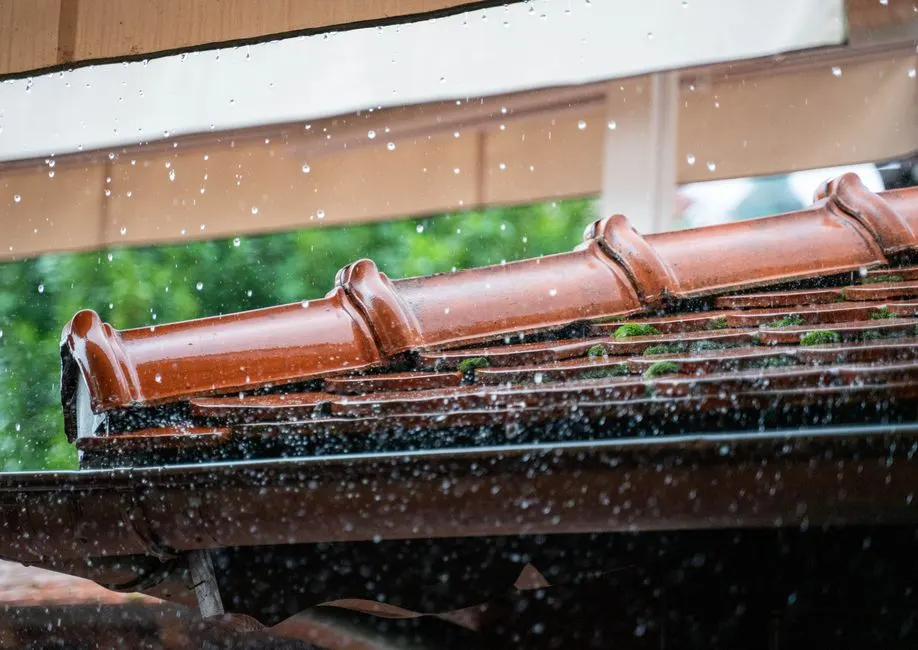
The flashing problems most likely to show up after a Altadena rainstorm are lifted step flashing at sidewalls, cracked chimney counter-flashing, dried-out pipe boot seals, and clogged valley flashing packed with pine needles. Those four spots cause roughly 8 out of 10 of the leaks we get called to after a winter storm in Altadena, California.
Roof flashing problems after a rainstorm in Altadena CA are almost never random. Water finds the same weak seams every time - the ones the last storm already loosened. Below we walk through the eight spots worth checking on your roof this week, what repairs cost in 2026, and when it is time to stop climbing the ladder and call someone.
Why Altadena Rainstorms Expose Flashing Problems
Altadena sits at the base of the San Gabriels, and that geography does specific things to a roof. Storms roll in fast off the mountains, dump 1 to 3 inches in a few hours, then clear out. That is a very different kind of rain than the slow drizzle coastal neighborhoods get.
Fast, heavy rain does two things. It drives water sideways into seams that a gentle rain never touches, and it overwhelms gutters that were already half-blocked with oak leaves and pine needles. When the gutter backs up, water pools at the drip edge and wicks backward under the shingles. That is where most of the "my ceiling is wet but the roof looks fine" calls start.
Add the local building stock to the picture. A lot of Altadena homes were built between 1920 and 1960, and many still have original or second-generation flashing that has been patched more than once. Flashing is a metal or membrane component that seals the joints where your roof meets something that is not roof - a wall, a chimney, a vent, a skylight. It is the part of the roof that does the least visible work and causes the most leaks.
If you want the full picture of what we do across the area, our Roof Flashing Repair Altadena CA service page covers every type of flashing we repair on local homes.
The 8 Flashing Problems to Check After a Altadena Rainstorm
Work through these in order. The first four are the ones we find most often in Altadena after a storm; the last four are the ones homeowners miss because they are harder to see from the ground.
1. Step flashing at sidewalls and dormers
Step flashing is the L-shaped metal that steps up the side of a wall where a sloped roof meets it. Each piece should overlap the one below it and tuck under the siding or stucco above. After a storm, look for pieces that have lifted, slid, or pulled away from the wall. A single lifted piece can let in a surprising amount of water - we have traced ceiling stains 12 feet from the actual entry point.
2. Chimney counter-flashing and the cricket
Chimneys are the number one leak source on older Altadena homes. The counter-flashing is the metal that sits in a groove cut into the masonry and folds down over the base flashing. Mortar cracks, the groove opens up, and water runs straight down the chimney into the attic. If your chimney is wider than 30 inches, it should also have a cricket - a small peaked diverter on the uphill side. Plenty of local chimneys do not.
We handle this often enough that it has its own page: Chimney Flashing Repair Altadena CA.
3. Vent pipe boots
Every plumbing vent and furnace flue that comes through your roof has a rubber or neoprene boot sealing it. That rubber has a lifespan - usually 10 to 15 years in our sun. After that it cracks, shrinks, and pulls away from the pipe. It is a cheap fix and one of the most common causes of small, hard-to-find leaks.
4. Valley flashing
Valleys are where two roof planes meet, and they carry more water than any other part of the roof. In Altadena, valleys fill up with oak leaves, pine needles, and grit. Once debris dams the valley, water sits against the flashing instead of running off. If you see granules from your shingles collecting in the valley, the shingles above it are wearing out too.
5. Kickout flashing at wall-to-roof transitions
Kickout flashing is the small angled piece at the bottom of a roof-to-wall line that throws water out into the gutter instead of letting it run down inside the wall. It has been required by code on new roofs since 2009, but most Altadena homes predate that. Without it, water runs down the siding, behind the stucco, and into the wall cavity. You often see the damage as a stain on an interior wall, well below the roofline.
6. Skylight flashing and curb seals
Skylights leak at the flashing, not usually through the glass. The curb - the raised frame the skylight sits on - has flashing that wraps its sides and steps into the shingles. After a storm, check for gaps at the corners and any bubbling or cracking in the sealant. A skylight that was fine for 15 years can start leaking in one storm once the sealant finally gives.
7. Drip edge along the eaves and rakes
Drip edge is the metal strip along the edge of the roof that keeps water from wicking back under the shingles and rotting the fascia. If yours is bent, missing sections, or rusted through, water runs straight down the fascia board and behind the gutter. Look for rust streaks on the fascia and paint peeling along the roofline.
8. Gutter-to-roof flashing and hangers
This is the joint where the gutter attaches under the drip edge. If the gutter has pulled away from the fascia - common after a heavy storm when it is full of water - the flashing behind it opens up. Water then runs behind the gutter and down the wall. Sagging gutters are the tell.
If you would rather have someone look at all eight at once, we offer a full Roof Flashing Inspection Altadena CA that covers each of these points and gives you photos of anything we find.
What Does Roof Flashing Problems Repair Cost in Altadena in 2026?
Typical 2026 pricing in Altadena runs $250 to $650 for a single flashing repair, $900 to $2,400 for a chimney re-flash, and $1,800 to $4,500 when a storm has damaged flashing across multiple roof penetrations. Those ranges assume a standard single-story or two-story home with asphalt shingle roofing.
What moves the number:
- Roof pitch and access. A steep roof or one with no safe ladder access adds labor.
- Material. Standard galvanized steel is the cheapest. Copper and lead flashing cost two to three times more but last decades longer.
- How much has to come off. Re-flashing a chimney means removing shingles and sometimes cutting a new reglet groove in the masonry.
- Whether the deck is damaged. If water has rotted the sheathing under the flashing, that is a separate repair.
We quote the job before we start, and the number you hear is the number you pay. No surprise line items after the fact.
Common Mistakes Homeowners Make After a Storm
The biggest mistake we see is sealing the wrong thing. Homeowners spot a wet ceiling, climb up, and caulk every seam they can reach. That traps water instead of stopping it, and it makes the real leak harder to find later.
Other ones we run into constantly:
- Assuming the leak is directly above the stain. Water travels along rafters and sheathing. The stain is often 5 to 15 feet from the actual entry point.
- Using the wrong sealant. Standard silicone does not bond well to wet metal or masonry. Roofing sealants are formulated for it.
- Walking the roof in the days right after a storm. Shingles and flashing are slick, and the fascia and gutter can be loose. This is how people get hurt.
- Waiting for the next storm to "see if it happens again." Every storm widens the gap. A $300 repair in November is often a $1,500 repair in February.
- Letting a handyman re-flash a chimney. Chimney flashing requires cutting into masonry and getting the counter-flashing into a proper reglet. Done wrong, it leaks worse than before.
When to Call a Professional
Call a roofer when you see water staining on a ceiling or wall, when flashing is visibly lifted or missing, or when you cannot safely get onto the roof to look. Those are the three situations where a DIY look costs more than it saves.
At Hometown Roof Protectors, we find the leak, fix the flashing, and test the repair with a hose before we leave. If the leak turns out to be a shingle or deck problem rather than flashing, we tell you that on the spot and quote the correct repair. We do not sell roof replacements to people who need a $400 flashing fix.
If you are not sure whether what you are seeing is flashing or something else, our Roof Flashing Leak Detection Altadena CA service is the fastest way to get a straight answer.
Frequently Asked Questions
How much does roof flashing problems repair cost in Altadena CA?
Most single flashing repairs in Altadena run $250 to $650 in 2026. Chimney re-flashing is $900 to $2,400. Multi-point storm damage typically lands between $1,800 and $4,500. The final number depends on roof pitch, access, and whether the decking underneath has been damaged.
What roof flashing problems to check after a Altadena rainstorm in Altadena, California?
Check step flashing at sidewalls, chimney counter-flashing, vent pipe boots, valley flashing, kickout flashing, skylight curbs, drip edge, and the gutter-to-roof joint. Those eight points account for nearly every post-storm leak we see on Altadena homes.
Can you fix roof flashing problems in Altadena?
Yes. We repair every type of flashing on Altadena roofs - chimney, step, counter, valley, kickout, skylight, vent pipe, drip edge, and wall flashing. Most single-point repairs are done in one visit, usually within two to three hours.
Do you offer roof flashing problems fix near me in Altadena?
We serve all of Altadena, including the neighborhoods around Eaton Canyon, the Altadena foothills, and the streets off Lake Avenue and Lincoln Avenue. Same-week scheduling is standard; emergency calls after a storm get priority.
How long does flashing repair take?
A single vent boot or step flashing repair takes one to two hours. A full chimney re-flash takes four to six hours. Multi-point storm repairs can run a full day. We give you a time window when we schedule and stick to it.
Get Help With Roof Flashing Repair in Altadena
If a Altadena rainstorm left you with a ceiling stain, a wet attic, or flashing you can see has moved, we can take a look this week. We repair flashing on Altadena homes every week of the rainy season, and we quote the job before we touch the roof.
Call Hometown Roof Protectors at 012345678 to schedule your flashing inspection or repair.