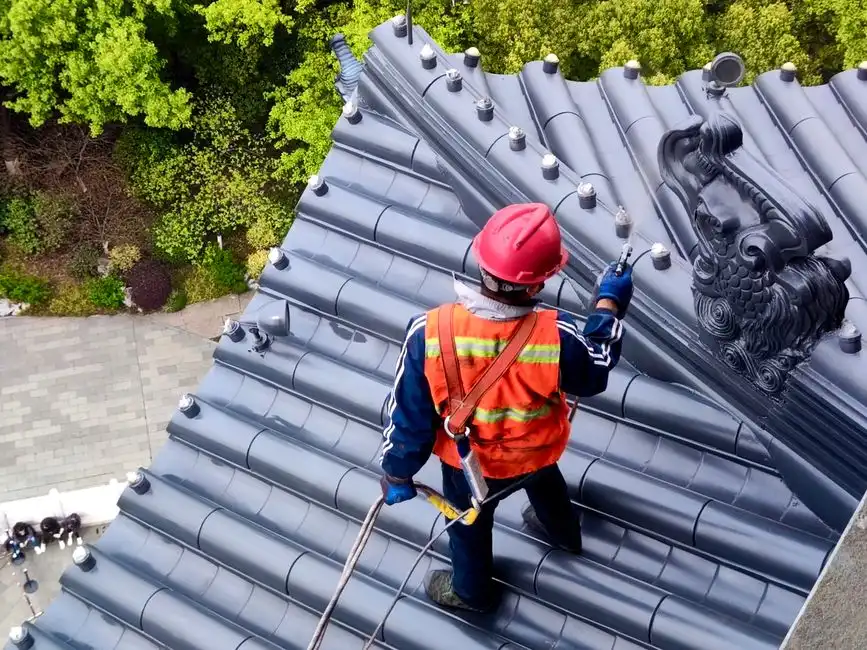
Valley flashing leaks happen when the metal channel that carries rainwater down the inside corner of two roof planes corrodes, lifts, or loses its seal - and you can usually spot the early signs from the ground or with a short ladder walk. If you see rust streaks, curled metal edges, or granules piling up in the valley, water is already getting under the flashing. This guide walks you through how to inspect valley flashing for leaks on your roof in Altadena, California, from the tools you need to the warning signs that mean it's time to call a pro.
Altadena's mix of mature oaks, steep hillside lots, and 1920s-1950s bungalows creates specific valley flashing problems you won't find in newer tract housing. Leaf litter traps moisture. Afternoon sun bakes the metal. Then a January storm dumps two inches in six hours and the leak shows up in your hallway ceiling. Knowing what to look for saves you thousands in drywall and framing repairs.
What valley flashing does and why it fails
Valley flashing is the W-shaped or V-shaped metal channel installed at the intersection of two roof slopes - the "valley" - that collects runoff from both planes and directs it to the gutter or downslope. It's the single highest-volume water path on most residential roofs. When it fails, water doesn't just drip; it pours into the roof deck, insulation, and ceiling below.
Valley flashing fails for four main reasons in Altadena:
- Corrosion. Galvanized steel flashing from the 1960s-1980s has a 25-40 year service life. If your home was built before 1990 and the flashing hasn't been replaced, it's on borrowed time.
- Lifted or separated seams. Thermal cycling - 100°F summer afternoons dropping to 45°F nights - works the metal loose. A 1/8-inch gap is enough to channel water sideways under the shingles.
- Debris dams. Oak leaves, pine needles, and seed pods pile up in valleys. A 2-inch debris dam can back water up 6-10 feet under the shingles during a heavy storm.
- Improper installation. Nail heads driven through the pan, insufficient overlap (less than 6 inches), or missing underlayment. We see this most often on homes where a previous owner patched a section without pulling the surrounding shingles.
If your valley flashing is beyond sealing and patching, Valley Flashing Repair Altadena CA covers the full replacement process, including custom-bent metal matched to your roof pitch.
How do you inspect valley flashing for leaks on your roof in Altadena, California?
You inspect valley flashing for leaks by checking four things in order: debris accumulation, metal condition, sealant and fastener integrity, and water-test behavior. Do the first three from a ladder at the eave or from a second-story window; only get on the roof if you have fall protection and the pitch is under 6/12.
Step 1: Clear the valley and look at what's underneath
Put on gloves and pull out leaves, twigs, and granules by hand. Don't use a leaf blower at full throttle - you'll drive grit under the flashing edges. Once the valley is clear, look at the metal surface. Rust spots smaller than a quarter are surface corrosion. Rust that's pitted or flaking means the metal is thinning from the inside.
Step 2: Check the metal edges and seams
Run your hand along both edges of the flashing where it meets the shingles. You're feeling for lifted edges, curled corners, or gaps wider than 1/8 inch. Pay close attention to the top of the valley where the two roof planes meet - that's where water first enters and where failures start.
Step 3: Inspect fasteners and sealant
Look for exposed nail heads. Every nail head in the valley pan should be covered by sealant or the overlapping metal. Sealant that's cracked, peeling, or pulling away from the metal has failed. In Altadena's UV environment, standard asphalt-based sealant lasts 3-5 years; polyurethane sealant lasts 8-12.
Step 4: Water-test the valley
Have a helper inside the house watching the ceiling below the valley while you run a garden hose at the top of the valley - low pressure, steady stream, 10-15 minutes. Start at the top and work down. If water appears inside, you've found the leak zone. If nothing shows, the leak may be coming from a different flashing component.
If you'd rather not get on the roof at all, our Roof Flashing Inspection Altadena CA service covers valleys, step flashing, chimney flashing, and vent penetrations in one visit.
Tools and safety for a valley flashing inspection in Altadena
You need five things: a stable ladder, gloves, a flashlight, a garden hose with a spray nozzle, and a phone to take photos. That's it. You do not need a pressure washer - 1,500+ PSI will tear shingle granules off and force water where it doesn't belong.
Safety matters more than tools. Altadena roofs are often two-story with 6/12 to 10/12 pitches. A fall from 18 feet is a life-changing event. If your roof is steeper than 6/12, wet from morning dew, or more than one story, stay on the ladder and inspect from the eave. You can see 80% of valley flashing problems from the ground with binoculars.
Best time to inspect: a dry morning in late October or early November, before the first big storm. Second-best: right after a storm passes, when leak stains are fresh and easy to trace.
Reading the clues: what valley flashing leaks look like
Valley flashing leaks leave a signature. Learn it and you'll catch problems before they rot your framing.
- Rust streaks on the flashing or shingles. Orange-brown staining running downslope from the valley means the metal is corroding and shedding iron oxide onto the roof surface.
- Granule piles in the valley. Shingle granules washing into the valley floor signal that water is running under the shingles instead of over them.
- Ceiling stains below the valley line. Brown rings or bubbling paint on the ceiling directly under a valley are the classic interior sign. The leak may be 4-8 feet upslope from where the stain appears.
- Attic moisture or mold. If your attic smells musty or you see dark staining on the roof decking near a valley, water has been getting in for months.
- Ice damming in winter. Altadena gets occasional freezing nights in December and January. If ice builds up in the valley, it can force water under the flashing.
One more clue: if your gutters overflow at the valley discharge point during a moderate rain, the valley flashing may be undersized or partially blocked. That's a Gutter Flashing Repair Altadena CA issue as much as a valley issue.
Common mistakes homeowners make when checking valley flashing
The biggest mistake is sealing over a problem instead of fixing it. A tube of roof cement smeared on a lifted seam buys you one season - maybe two. It doesn't address the corroded metal underneath, and it traps moisture against the flashing, which accelerates rust.
Other mistakes we see on Altadena roofs:
- Walking the valley itself. The valley is the weakest part of the roof structure. Step on the flashing and you'll deform it, creating the exact gap you're trying to prevent.
- Using the wrong sealant. Silicone doesn't adhere well to metal. Asphalt cement cracks in UV. Use polyurethane flashing sealant rated for metal roofs.
- Ignoring the underlayment. Flashing is the first line of defense; underlayment is the second. If the underlayment under the valley is torn or missing, new flashing alone won't stop the leak.
- Pressure-washing the valley. This strips granules, drives water under edges, and voids most shingle warranties.
- Assuming the leak is in the valley. About 30% of the "valley leaks" we inspect turn out to be chimney, skylight, or vent pipe flashing leaking upslope and running down the valley. If you've sealed the valley twice and it still leaks, look at the Chimney Flashing Repair Altadena CA or skylight flashing instead.
When to call a professional for valley flashing inspection and repair in Altadena CA
Call a professional when the flashing is rusted through, when the leak returns after you've sealed it, when the roof pitch is steeper than 6/12, or when you see interior ceiling damage. Those four situations mean the fix requires pulling shingles, replacing metal, and re-flashing the valley - not a tube of sealant.
We're Hometown Roof Protectors, and we've inspected valley flashing on bungalows off Lake Avenue, mid-century ranches near Farnsworth Park, and hillside homes up in the Meadows. We find the leak, fix it, and water-test the repair before we leave. If you want a second opinion on a valley you've already tried to seal, we'll tell you straight whether it needs a patch or a full replacement.
For leaks that are actively dripping into your living space right now, our Emergency Roof Flashing Repair Altadena CA team responds same-day.
Frequently Asked Questions
How much does valley flashing inspection cost in Altadena CA?
Typical 2026 pricing in Altadena runs $150-$350 for a standalone valley flashing inspection, and $0-$150 when bundled with a full roof inspection. If the inspection turns into a repair, most companies credit the inspection fee toward the work. Emergency or after-hours inspections run $250-$500.
How to inspect valley flashing for leaks on your roof in Altadena, California?
Clear debris from the valley, check the metal for rust and lifted edges, inspect sealant and nail heads, then water-test with a garden hose for 10-15 minutes while someone watches inside. Stay off the roof if the pitch exceeds 6/12 or the surface is wet.
Can you inspect valley flashing in Altadena?
Yes. We inspect valley flashing across Altadena, including hillside properties, historic bungalows, and homes under oak canopy. We check metal condition, seam integrity, underlayment, and surrounding flashing, then water-test to confirm the leak source before recommending any repair.
Do you offer valley flashing inspection near me in Altadena?
We serve all Altadena neighborhoods - from the Altadena Drive corridor to the foothill streets above Loma Alta. Same-week scheduling is standard; same-day for active leaks. Call to book a valley flashing inspection and we'll confirm a window that works for you.
How long does valley flashing last in Altadena's climate?
Galvanized steel valley flashing lasts 25-40 years here. Copper lasts 70+ years but costs 3-4x more upfront. UV exposure, oak leaf tannins, and freeze-thaw cycles in January all shorten the lifespan of lower-grade metal. If your flashing is older than 30 years, plan for replacement.
Get help with Roof Flashing Repair in Altadena
If your valley flashing is rusted, lifted, or leaking into the house, we can inspect it, find the source, and repair it before the next storm. Call Hometown Roof Protectors at 012345678 to schedule your valley flashing inspection in Altadena.